
What is the physics involved in snowboarding?
Asked by: Mary Lou CampbellAnswer
There are many tricky aspects to snowboarding that involve a great deal of skill and agility.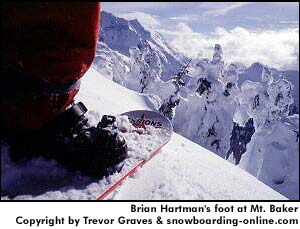 First lets understand the movement of the person and board over the snow. The
board moves quickly down the hill because it is lubricated by the water present in
the snow. When the board is placed on top of the snow, the contact between the
snow and board creates friction which melts a small amount of water. This water is
present throughout the length of the board (or at least the length of it that's in
contact with the snow) and when the rider is coasting down the mountain she is
actually coasting on a very thin film of water.
First lets understand the movement of the person and board over the snow. The
board moves quickly down the hill because it is lubricated by the water present in
the snow. When the board is placed on top of the snow, the contact between the
snow and board creates friction which melts a small amount of water. This water is
present throughout the length of the board (or at least the length of it that's in
contact with the snow) and when the rider is coasting down the mountain she is
actually coasting on a very thin film of water.
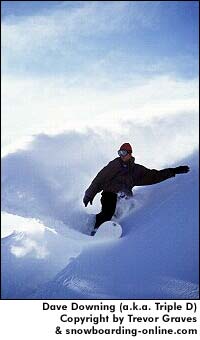 Shredding is also important to making it down the hill in one piece. This is
accomplished when the rider shifts his/her weight and moves the board from one edge
to the other. The rider must be careful to keep their center of gravity over the
edge of the board that is in contact with the snow. If the rider fails to do so, the most common experience is to land on for them to land on their back or front (depending on which board edge they are switching to), and this is what wearing the proper snowboard gear is for.
Shredding is also important to making it down the hill in one piece. This is
accomplished when the rider shifts his/her weight and moves the board from one edge
to the other. The rider must be careful to keep their center of gravity over the
edge of the board that is in contact with the snow. If the rider fails to do so, the most common experience is to land on for them to land on their back or front (depending on which board edge they are switching to), and this is what wearing the proper snowboard gear is for.
To slow down and turn, a boarder 'digs' into the snow with their riding edge and leans in the direction they want to move. The larger amount of snow and and the force of gravity create a set of forces whose net force push the board in the direction desired by the rider.
Probably the most fundamental physical property in snowboarding is simply keeping the center of gravity over the riding edge. Any time an objects center of gravity moves beyond the base which keeps the object up, the object will fall.
Images & additional snowboarding resources: snowboarding-online.com
Answered by: Philip McCulloch, Optical Sciences Undergrad, UofA Tucson